
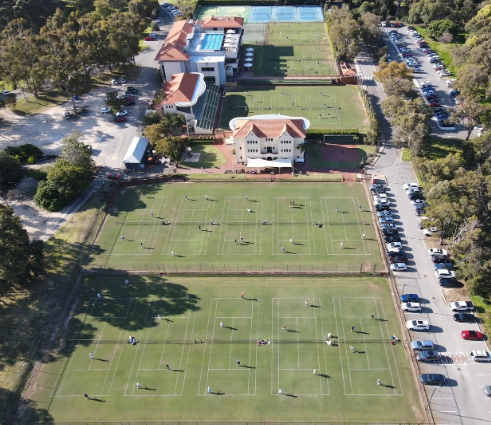
A major international tennis event is coming to Perth, but questions are already being raised about fairness, recognition and whether Tennis West truly values the clubs that make these events possible.
Western Australian tennis has every reason to celebrate.
From 25 April to 8 May 2027, Perth will welcome the ITF World Tennis Masters Team and Individual Championships, featuring some of the world’s finest players in the 55, 60, 65 and 70 age categories.
It will be the first time since 2009 that Australia has hosted these World Championships, with competition spread across four of Perth’s established grass-court venues: Royal Kings Park Tennis Club (RKPTC), Cottesloe Tennis Club, Alexander Park Tennis Club and Dalkeith Tennis Club.
This is a tremendous opportunity to showcase Western Australian tennis, attract international visitors and generate exposure for the clubs that form the backbone of our sport.
But an emerging controversy surrounding the official government announcement raises an uncomfortable question: Is Tennis West recognising the clubs doing the heavy lifting?
Why Cottesloe and not Royal Kings Park?
Court Talk understands that Tennis Australia, together with the WA Government, is preparing to hold a major media announcement on Thursday, 29 October, featuring Tennis Australia CEO Andrew Abdo and WA Premier Roger Cook.
However, we understand the proposed location for this announcement is Cottesloe Tennis Club, rather than Royal Kings Park Tennis Club.
Why does that matter?
Royal Kings Park has reportedly undertaken considerable work to help secure the championships and establish itself as the tournament headquarters. It is also preparing to play a central hosting role across the entire two-week competition.
If that is the case, surely Royal Kings Park should have been the first venue considered to host the official announcement.
This is not a criticism of Cottesloe Tennis Club, which is another outstanding Western Australian tennis institution and an important championship venue.
The issue is not whether Cottesloe deserves recognition. It absolutely does. The issue is whether Royal Kings Park is receiving the recognition its contribution deserves.
Clubs do the work. Who receives the recognition?
Hosting an international tennis championship doesn’t happen by accident.
Behind every successful event are committees, volunteers, club administrators and members who dedicate countless hours to planning, preparing facilities, coordinating logistics and ensuring the event can be delivered to an international standard.
Clubs make significant commitments, often at considerable financial and operational cost, to ensure Western Australia can attract and stage prestigious events.
For a club such as Royal Kings Park, the opportunity to host a World Championship represents more than two weeks of international tennis.
It provides an extraordinary platform to attract new members, showcase facilities, strengthen commercial partnerships, recognise volunteers and generate long-term benefits for the club.
An official media announcement involving the Premier of Western Australia and the CEO of Tennis Australia provides precisely the kind of exposure community sporting clubs rarely receive.
The television coverage, photographs, interviews, social media exposure and government publicity associated with such an announcement can create significant promotional value.
So why wouldn’t the governing bodies want to maximise that opportunity for the club reportedly serving as tournament headquarters?
Tennis West should be empowering clubs, not overlooking them
This situation also raises a broader issue about Tennis West’s relationship with its affiliated clubs.
For years, the tennis community has been told that clubs are the foundation of the sport.
We hear constant messages about participation, club development, engagement, sustainability and the importance of strengthening grassroots tennis.
Yet when an opportunity arises to place a major international spotlight on a club making a substantial contribution to the sport, questions emerge about whether that club is being given appropriate recognition.
There appears to be a growing disconnect between the language of club support and the practical decisions that determine which organisations benefit from the exposure generated by major events.
Tennis West should be actively looking for opportunities to elevate the profile of its clubs.
It should be celebrating their achievements, creating commercial opportunities, recognising their volunteers and ensuring they receive value from the events they help deliver.
A governing body’s success should be measured not simply by the events it announces, but by the opportunities and lasting benefits it creates for the clubs delivering them.
What message does this send to other clubs?
There is also a bigger issue at stake.
If clubs are expected to invest their time, resources, facilities and volunteer effort into securing and delivering major events, they should reasonably expect recognition and promotional opportunities in return.
Otherwise, what incentive exists for clubs to take on these responsibilities in the future?
The challenge facing sporting administrators is to build partnerships in which clubs feel genuinely valued rather than simply being regarded as venues available to deliver an event.
Recognition costs very little.
But overlooking the contribution of a major host club risks damaging confidence, goodwill and the relationships that governing bodies depend upon.
The message should be simple: When clubs invest in growing tennis, tennis administrators should invest in promoting those clubs.
Five questions Tennis West should answer
Court Talk believes there are several reasonable questions that deserve clarification:
- Why was Cottesloe Tennis Club reportedly selected to host the official media announcement instead of Royal Kings Park?
- Was Royal Kings Park consulted or offered the opportunity to host the announcement?
- What consideration was given to the club’s reported role in securing the championships and serving as tournament headquarters?
- Who ultimately made the decision about the media announcement’s location, and what criteria were used?
- What commitments will Tennis West and Tennis Australia make to ensure all four host clubs receive meaningful publicity, recognition and commercial exposure throughout the championships?
There may well be logistical, government or media considerations behind the proposed venue.
If so, those reasons should be explained transparently.
But without that explanation, it is entirely reasonable for Royal Kings Park members, volunteers and the wider tennis community to question the decision.
A missed opportunity to celebrate a club?
Let’s be clear.
The arrival of the ITF World Tennis Masters Championships is wonderful news for Western Australia.
Court Talk wholeheartedly supports the event, the players travelling to Perth and every club contributing to its success.
This should be an occasion when the entire tennis community comes together to celebrate a significant international sporting achievement.
But major events should also leave a legacy.
That legacy must extend beyond government announcements, visiting players and two weeks of competition.
It should strengthen the clubs that make these events possible.
If Royal Kings Park is taking on the responsibility of tournament headquarters, why wouldn’t Tennis West and Tennis Australia want the Premier standing on its grass courts, surrounded by its members and volunteers, telling the world about the championships coming to Perth?
Surely that would be the perfect demonstration of what supporting grassroots tennis actually looks like.
The question isn’t whether Cottesloe Tennis Club deserves the spotlight.
The question is whether Royal Kings Park Tennis Club has earned the right to share in it — and whether those responsible for the decision have properly recognised its contribution.
Because ultimately, without our tennis clubs, there are no international championships.
And without the volunteers and members who sustain those clubs, there is no grassroots tennis.
It’s time we started recognising the people and clubs who make the sport possible. Not just those standing in front of the cameras.