
When an independent governance review identifies “Refreshing the Board” as its number one recommendation, it should reasonably prompt one fundamental question: what does genuine board renewal actually look like?
For Tennis West, that question remains relevant.
In September 2024, Tennis West announced the immediate and somewhat surprising resignations of then President Nick Gray, along with directors Paul Hemsley and Karen Vahala.
Gray’s departing words were particularly significant:
“The only way the Board can focus on growing tennis in WA is through Board renewal.”
That statement closely reflected the findings of the independent governance review commissioned by the Department of Local Government, Sport and Cultural Industries following what Tennis West itself described as a “difficult period” for the organisation.
But nearly two years later, an obvious question remains.
Why did Gray, Hemsley and Vahala leave, while two directors who had served through much of the period that prompted the governance review — Pam Cresswell and Jo Quinn — remained?
And perhaps more importantly: what exactly did “board renewal” mean?
Three resignations — but little public explanation
Tennis West’s announcement on 6 September 2024 confirmed that Gray, Hemsley and Vahala had resigned effective immediately following the Board meeting of 3 September.
Beyond Gray’s short statement about renewal, remarkably little was publicly explained about why three directors departed simultaneously.
Were the resignations voluntary?
Were they requested?
Were they connected directly to recommendations contained in the independent governance review?
Did the independent reviewer identify particular board dynamics or individuals that required change?
Were clubs provided with the complete reasoning?
If not, why not?
For an organisation simultaneously talking about rebuilding trust and increasing transparency, surely those are legitimate questions for affiliated clubs and members to ask.
The governance review itself specifically identified increasing transparency of Board and committee discussions, key focus areas and actions as an area requiring attention.
That makes the limited explanation surrounding three simultaneous resignations even more worthy of scrutiny.
Who remained?
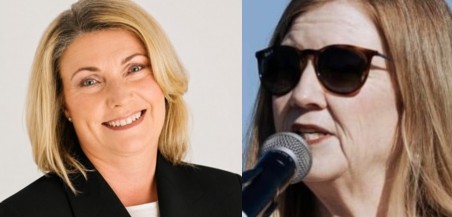
Following those resignations, existing director Pam Cresswell was elected President and existing director Jo Quinn became Vice-President, both unopposed and unanimously supported by a depleted Board.
There is nothing inherently improper about either appointment.
But there is an important governance question that Tennis West members are entitled to examine.
Cresswell and Quinn were not newcomers arriving after the turbulent period.
They were members of the Board during it.
Cresswell joined the Tennis West Board in 2019 and subsequently became Vice President. Quinn joined as a Board appointed director in March 2021. Both were therefore directors well before the governance difficulties that ultimately resulted in the DLGSC-commissioned independent review.
Indeed, Cresswell held an especially significant governance position.
Tennis West records show that she chaired its Governance, People and Culture Committee, whose responsibilities included advising the Board on best practice governance, monitoring Board and director performance and effectiveness, dealing with constitutional issues and supporting the organisation’s people and culture systems.
That does not establish personal wrongdoing by Cresswell – nor does the publicly released summary of the governance review identify Cresswell or Quinn as individually having breached governance requirements.
But it makes the question of accountability entirely reasonable.
If governance had deteriorated sufficiently that the State Government commissioned an independent review, and if the review’s first overarching recommendation was “Refreshing the Board”, why did the person who had chaired the Board committee principally responsible for governance emerge as President?
What exactly was being “refreshed”?
The publicly released review summary identified four overarching themes:
- Refreshing the Board
- Building respectful relationships
- Developing sustainable independence
- Meeting sports governance standards.
Those are not insignificant recommendations.
They arose after a period described as involving a difficult CEO transition, governance challenges, strained relationships and the need for improved Board processes.
Future DLGSC funding releases were also linked to implementing key recommendations of the review.
Against that background, the sequence of events deserves examination.
Gray resigned.
Hemsley resigned.
Vahala resigned.
Cresswell stayed — and became President.
Quinn stayed — and became Vice-President.
So what criteria determined who represented renewal and who represented continuity?
Were individual director assessments undertaken before those decisions?
What did those assessments conclude?
Was every director who had served during the troubled period subjected to the same level of scrutiny?
And were affiliated clubs ever provided with sufficient information to understand the distinction?
The missing piece: transparency
This is ultimately less about personalities than it is about governance.
Good governance cannot simply mean announcing that recommendations have been implemented.
It requires stakeholders being able to see how decisions were reached, why particular directors remained, why others departed and how accountability was applied consistently.
Tennis West said following the review that it wanted to rebuild relationships with stakeholders and improve boardroom culture.
It also committed to an independent Board and 360-degree director evaluation.
That raises another important question:
What did those subsequent evaluations find?
Were the results ever communicated meaningfully to Tennis West’s member clubs?
If the organisation genuinely wants greater transparency, releasing an appropriate summary of those findings would seem entirely consistent with that commitment.
Cresswell’s governance role deserves scrutiny
The significance of Pam Cresswell’s position cannot simply be brushed aside.
She was not merely another director.
She was Vice-President during part of the period in question and chaired the Governance, People and Culture Committee.
Tennis West’s own annual report described that committee as responsible for monitoring Board and director performance and effectiveness and advising around governance best practice.
Yet following a government-commissioned review recommending substantial governance reform, Cresswell ultimately became President.
She was subsequently returned to the Board at the 2025 AGM and then unanimously re-elected President for another three-year term. Tennis West credits her with leading significant governance reforms.
That may be entirely justified.
But members should be entitled to understand why.
What conclusions were reached regarding the performance of the Governance, People and Culture Committee during the earlier period?
What responsibility, if any, did its chair carry for governance shortcomings subsequently identified?
What changed?
And what demonstrated that continuity at the top represented the appropriate solution to a report calling for renewal?
Those questions should not be regarded as attacks.
They are exactly the sort of questions healthy sporting organisations should welcome.
And what about Jo Quinn?
Similar questions arise regarding Jo Quinn.
Quinn joined the Board in March 2021 specifically bringing legal, strategic and governance expertise and later became Vice-President following the September 2024 departures.
Again, there is no basis in Tennis West’s publicly released governance-review summary to state that Quinn personally committed a governance breach.
But she was unquestionably part of the Board throughout much of the relevant period.
If renewal was considered sufficiently important for three directors to leave immediately, members are entitled to ask why Quinn’s continuation — and elevation to Vice-President — was considered consistent with that renewal.
Tennis West clubs deserve the complete story
The question confronting Tennis West is therefore quite simple.
Was September 2024 genuine board renewal — or selective board renewal?
If Gray, Hemsley and Vahala believed stepping away was necessary to allow the organisation to move forward, what distinguished their positions from those of other directors who had governed throughout the same turbulent period?
Why has the fuller story behind three simultaneous resignations never been clearly explained?
Were the member clubs told everything they were entitled to know?
Why did the organisation’s two most senior positions immediately go to existing directors rather than forming part of the refresh?
And most importantly:
If accountability and transparency were central lessons arising from the governance review, shouldn’t Tennis West now demonstrate both by answering those questions openly?
Nobody should be suggesting that serving on a Board during a difficult period automatically makes a director culpable for everything that occurred.
Nor does the publicly available governance review establish personal breaches by Pam Cresswell or Jo Quinn.
But accountability must work both ways.
Those who departed deserve transparency about why they departed.
Those who remained should be able to explain why remaining represented the best interests of Tennis West.
And the clubs — the actual members of Tennis West — deserve enough information to form their own judgement.
The organisation has repeatedly spoken about renewal, transparency, respectful relationships and rebuilding trust.
Those are admirable objectives.
But trust isn’t restored simply by changing three names around a boardroom table.
It is restored when difficult questions receive clear answers.
And almost two years after Tennis West announced one of the most significant Board upheavals in its recent history, there are still some very important questions waiting to be answered.

One Response
When Muppets are at the helm, things usually go pear shaped….
Brett Patten had tennis in WA pumping, fact, it’s now rooted, another fact.